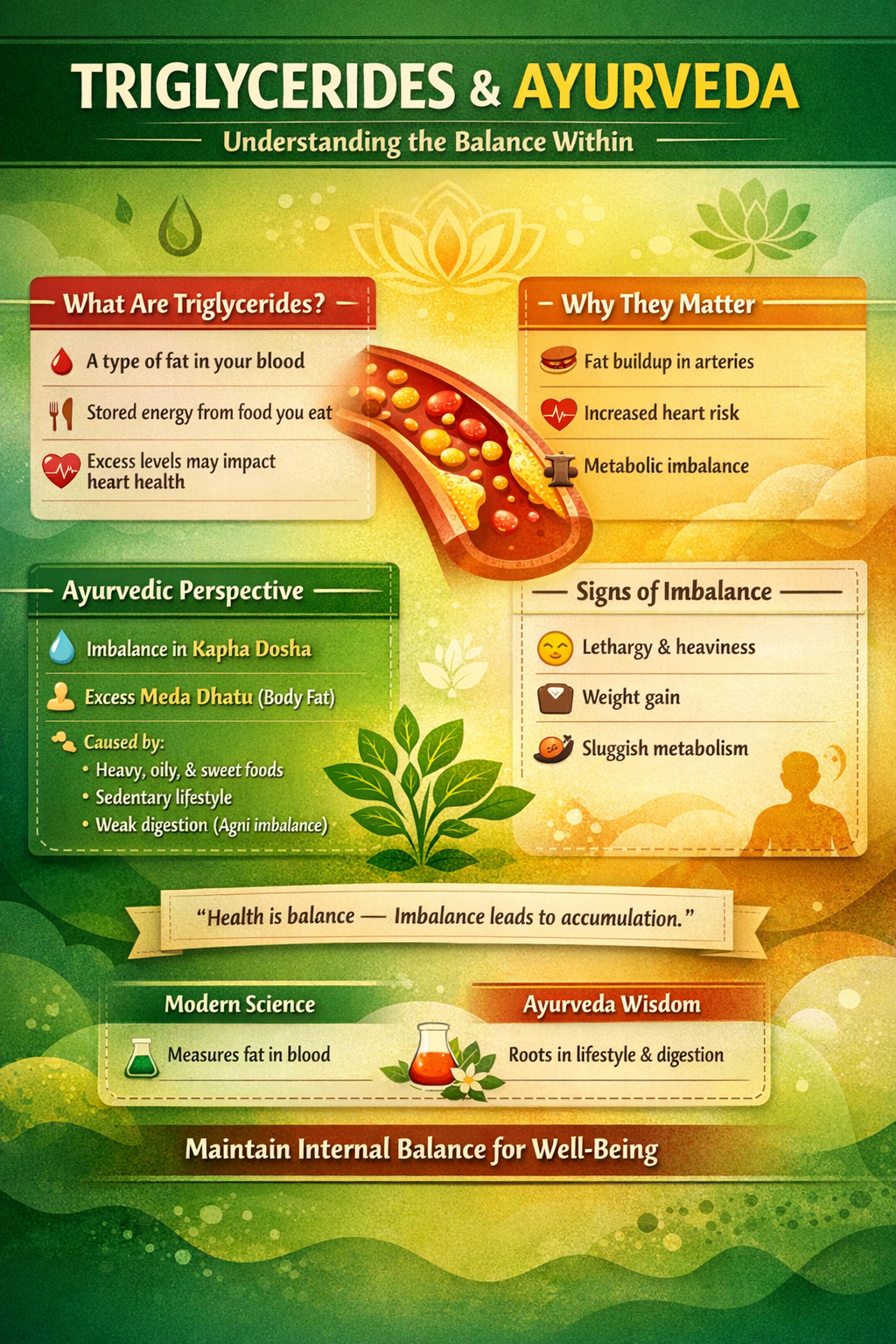
What Are Triglycerides?
Introduction
Triglycerides are a type of fat (lipid) found in the bloodstream and stored in fat cells. They are a vital source of energy for the body and play a crucial role in metabolism. When we consume more calories than the body requires, the excess energy is converted into triglycerides and stored for later use. However, persistently high levels of triglycerides in the blood can increase the risk of serious health conditions, including cardiovascular disease and stroke.
Ayurveda offers a natural and sustainable approach to understanding and managing triglyceride levels by addressing the root causes of imbalance and supporting healthy metabolism. Cholesterol vs. Triglycerides: Understanding the Difference
Cholesterol and triglycerides are both lipids present in the blood, but they differ in structure, function, and role in the body.
What Is Cholesterol?
Structure: Cholesterol is a waxy, fat-like substance classified as a sterol, with a chemical structure distinct from triglycerides.
Functions: Cholesterol is essential for:
Formation of cell membranes
Production of hormones (e.g., estrogen, testosterone)
Synthesis of vitamin D
Formation of bile acids for fat digestion
Transport: Cholesterol circulates in the blood via lipoproteins
LDL (Low-Density Lipoprotein): Often termed “bad” cholesterol, as high levels contribute to plaque formation in arteries.
HDL (High-Density Lipoprotein): Known as “good” cholesterol, as it helps remove excess cholesterol from the bloodstream.
What Are Triglycerides?
Structure: Triglycerides consist of one glycerol molecule attached to three fatty acid chains.
Functions: They serve as the primary form of energy storage in the body. Excess calories are converted into triglycerides and stored in fat tissue, to be released as energy between meals.
Transport: Triglycerides are transported through the bloodstream within lipoproteins. Elevated triglyceride levels are associated with an increased risk of cardiovascular disease, especially when combined with other risk factors.
Key Differences at a Glance
Chemical Structure: Cholesterol is a sterol; triglycerides are composed of glycerol and fatty acids.
Primary Function: Cholesterol supports cellular and hormonal functions; triglycerides store and supply energy.
Transport: Cholesterol is carried mainly by LDL and HDL; triglycerides circulate within lipoproteins.
Both are essential for normal physiological functioning, but imbalances can lead to significant health issues.
Panchakarma therapies help eliminate accumulated toxins and restore doshic balance.
Beneficial therapies for triglyceride management include:
Virechana (Purgation therapy): Eliminates excess Pitta and toxins
Basti (Medicated enema): Improves digestion, detoxifies the colon, and balances Vata
These therapies should always be undertaken under professional Ayurvedic supervision.Ayurvedic Herbal Supplements
Commonly used supplements for triglyceride management include:
Guggul : Support lipid regulation
Brahmi : Aid metabolic and cognitive balance
Turmeric : Provide anti-inflammatory and antioxidant support
Consultation with a qualified practitioner is essential before initiating any supplementation.
Ayurveda provides a personalized and holistic framework for managing triglycerides by addressing root causes and restoring systemic balance.
Key principles include:
- Strengthening Agni for efficient lipid metabolism
- Consuming healthy fats in moderation
- Using Ayurvedic herbs and formulations appropriately
- Adopting a disciplined daily routine and stress management practices
- Utilizing Panchakarma therapies when indicated
- With proper guidance, Ayurveda supports long-term triglyceride control and overall well-being.
Frequently Asked Questions (FAQs) on Triglycerides Ayurvedic Treatment:
1. Can Ayurveda replace conventional treatment for triglycerides?
Ayurveda is best used as a complementary approach and should not replace conventional medical care without professional guidance.
2. How long does it take to see results with Ayurvedic treatment?
Results vary depending on individual constitution, severity, and adherence to treatment. Consistency is key.
3. Are Ayurvedic treatments safe?
When guided by qualified practitioners, Ayurvedic treatments are generally safe. Disclosure of existing medical conditions is essential. Conclusion: Ayurvedic Treatment for High Triglycerides Naturally
Ayurveda empowers individuals to manage triglyceride levels naturally by integrating diet, lifestyle, herbal support, and detoxification. With personalized care and professional guidance, this ancient science offers a sustainable path toward metabolic balance and holistic health.